3 hole brick About
3 Hole Brick Description
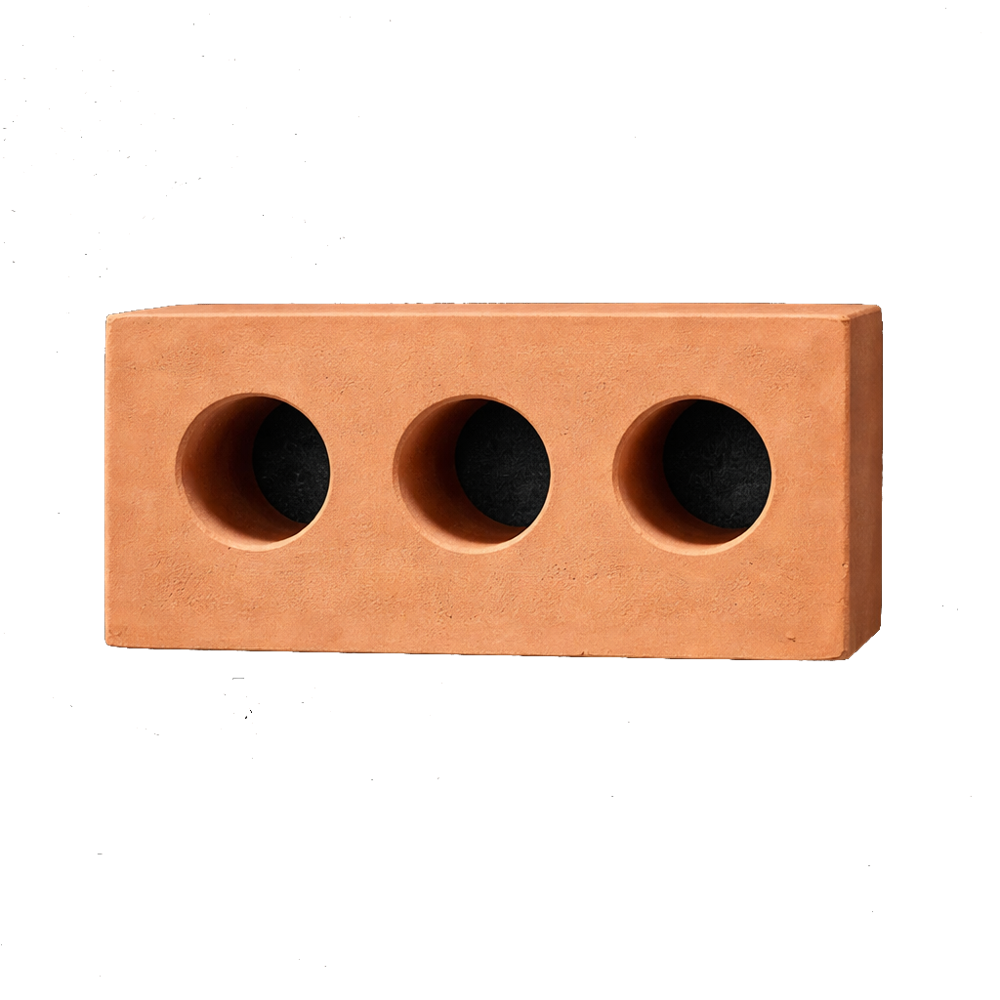
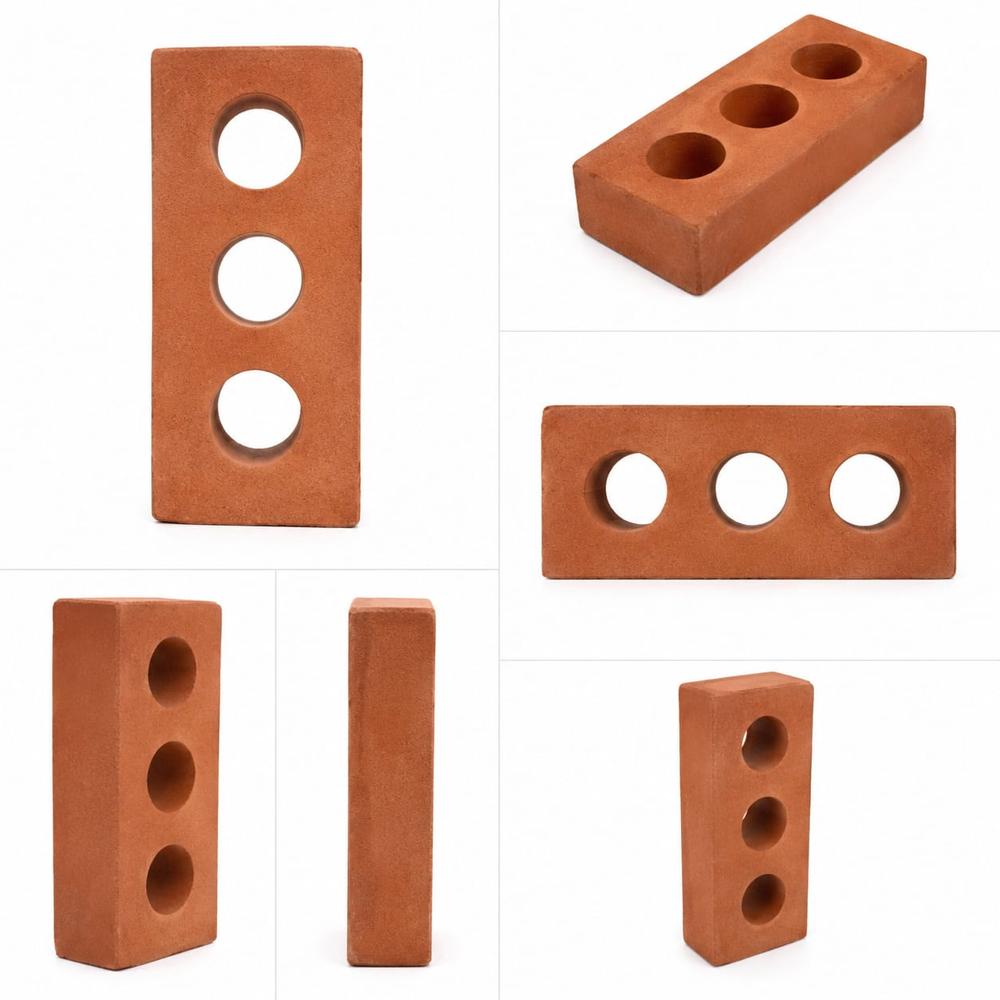
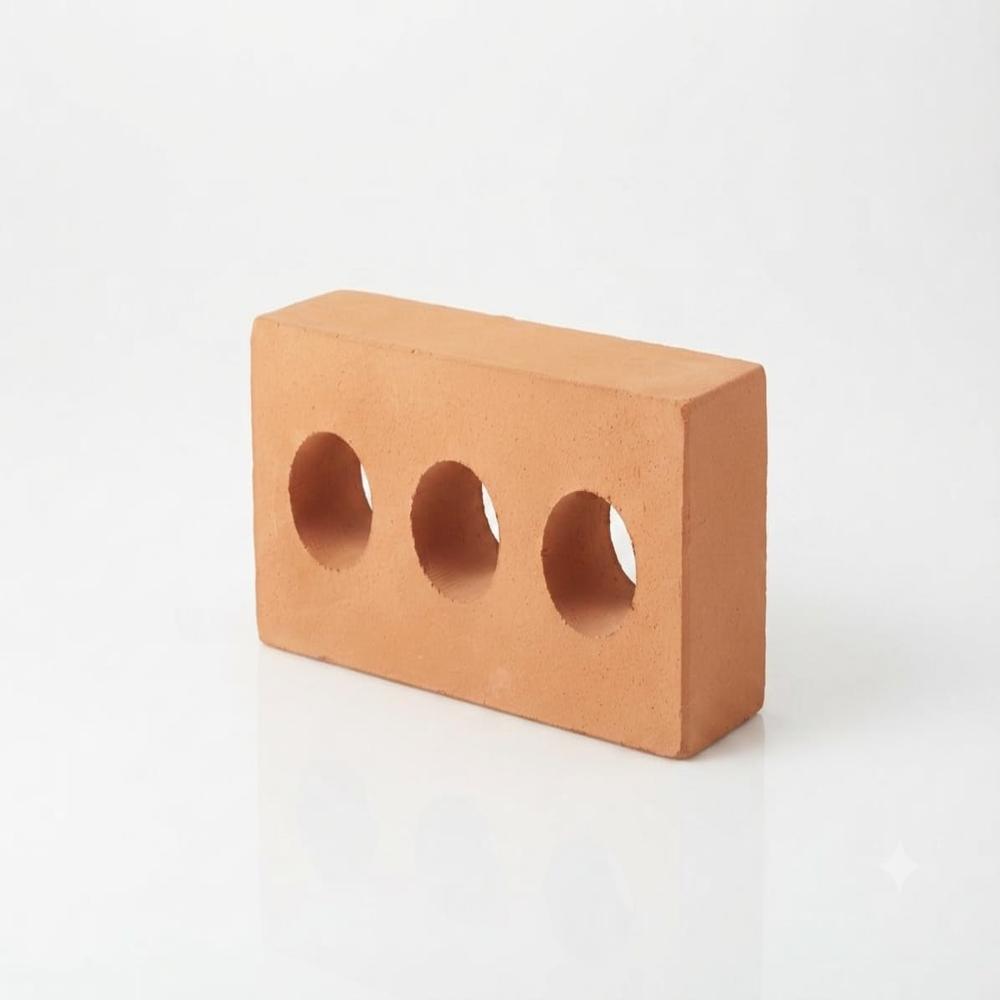
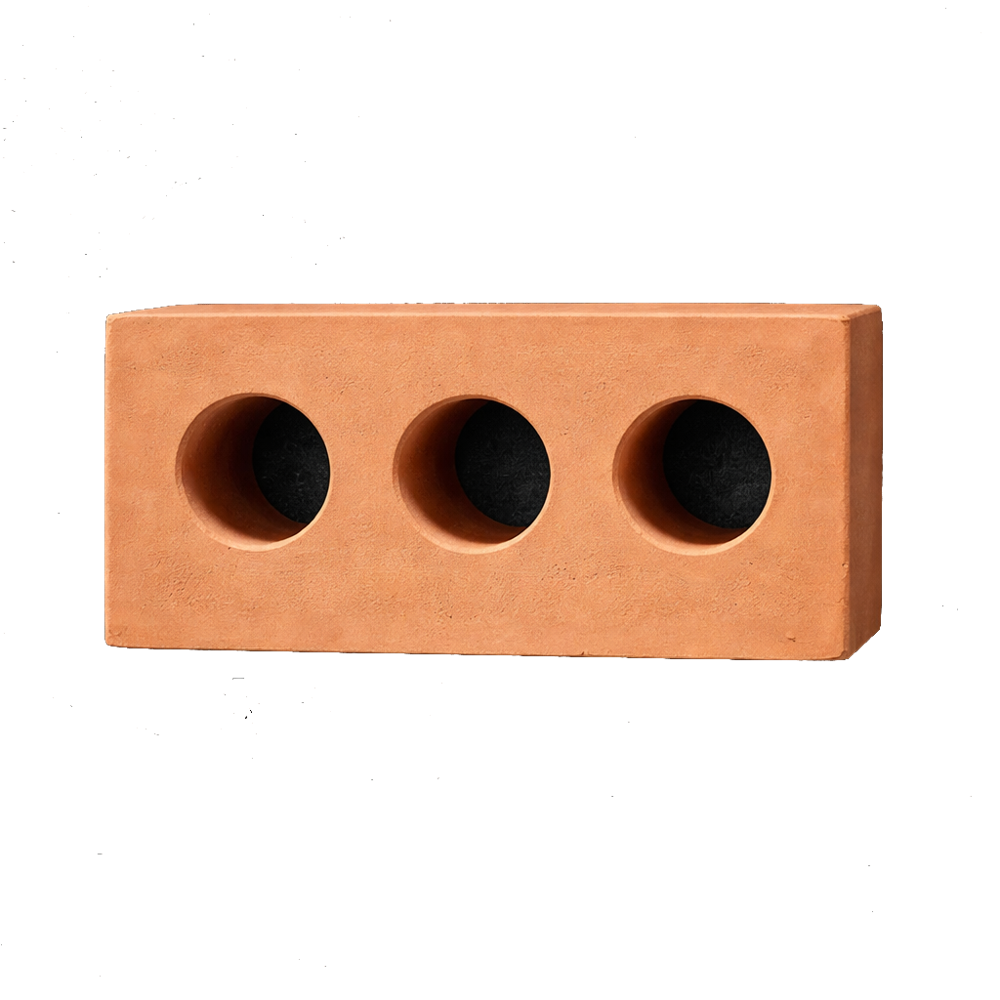
3 Hole Brick is a premium-quality clay brick manufactured with three vertical holes to provide an optimal balance of strength, durability, and reduced weight. These bricks are widely used in modern construction projects due to their excellent load-bearing capacity, superior mortar bonding, and enhanced thermal insulation properties. The three-hole design helps minimize material usage while maintaining structural integrity, making them a cost-effective and eco-friendly construction solution. 3 Hole Bricks are ideal for residential, commercial, and industrial building applications.
Features:
- High compressive strength
- Uniform dimensions and smooth finish
- Excellent durability and weather resistance
- Improved mortar adhesion
- Lightweight and easy to transport
- Better thermal and sound insulation
- Cost-effective construction material
Applications:
- Residential building construction
- Commercial complexes
- Industrial structures
- Boundary walls
- Partition walls
- Masonry and load-bearing walls
Enhanced Thermal and Sound InsulationThanks to its medium porosity and the three-hole design, this brick reduces heat flow and dampens noise more effectively than solid bricks. Its low thermal conductivity ensures comfortable indoor temperatures and improved energy efficiency, making it ideal for both hot and cold climates.
Eco-Friendly and Safe Building MaterialProduced from natural, recyclable clay, these bricks prioritize environmental sustainability. Their high fire resistance adds an extra layer of safety to buildings, ensuring compliance with safety standards and peace of mind for builders and occupants alike.
Versatile Applications and Reliable PerformanceWith high load-bearing capacity and enhanced resistance to weathering, these bricks are suitable for wall construction, partition walls, and both load-bearing and non-load-bearing structures. Their standard size and lightweight nature streamline installation, especially with mortar jointing.
FAQ's of 3 hole brick:
Q: How should three-hole clay bricks be installed for best results?
A: For optimal performance and stability, these bricks should be installed using mortar jointing. This traditional method ensures strong adhesion and alignment, enhancing the overall durability and structural integrity of walls.
Q: What are the main benefits of using three-hole bricks over solid bricks?
A: Three-hole bricks are lighter and easier to handle, provide superior thermal and sound insulation due to their design, and consume less material, making them more eco-friendly. They also offer comparable strength and greater fire resistance.
Q: When is it suitable to use these bricks in construction projects?
A: These bricks are ideal for constructing both load-bearing and non-load-bearing walls, including external and internal partitions in residential, commercial, and institutional buildings. Their durability and insulation properties make them suitable for varied climates and applications.
Q: Where are these three-hole bricks most commonly applied?
A: They are widely used in wall construction, partition walls, and as foundational units in various structural layouts. Their versatility allows them to be used in homes, offices, schools, and industrial buildings.
Q: What is the typical process for manufacturing these three-hole clay bricks?
A: These bricks are made by shaping natural clay into a rectangular form with three circular holes, then firing it at high temperatures to achieve durability and a smooth finish. The process ensures high strength, low water absorption, and consistent quality.
Q: How does the porosity of these bricks affect their performance?
A: The medium porosity, resulting from the three holes, helps reduce the brick�2s weight and enhances its thermal and sound insulation capabilities. It also improves the brick�2s fire resistance and maintain structural strength.
Q: What makes these bricks environmentally friendly?
A: These bricks are made from natural clay, can be recycled, and require less raw material due to their hollow design. Their energy-efficient properties further contribute to eco-friendly construction practices.

 Send Inquiry



 Send Inquiry

 Send Inquiry